The Future of Passwordless Authentication


For decades, passwords have been the first line of defence for digital accounts. They have also been one of the weakest.
Despite growing awareness of cyber security, password reuse, weak credentials and phishing remain among the leading causes of data breaches. As organisations strengthen their cyber security strategies, many are asking a different question: what if passwords were no longer needed?
Passwordless authentication is rapidly evolving from an emerging technology into a mainstream security practice. Supported by major technology providers including Microsoft, Google and Apple, passwordless sign-in methods such as passkeys are becoming increasingly common across consumer and enterprise applications.
Passwords have served organisations well for decades, but they present challenges that technology alone cannot solve.
Users often:
According to the 2025 Verizon Data Breach Investigations Report, credential abuse remains one of the most common ways attackers gain initial access to organisations.
The FIDO Alliance also highlights that password-based authentication continues to expose organisations to phishing and credential theft, driving demand for stronger authentication methods.
At the same time, cyber criminals are increasingly using artificial intelligence to produce more convincing phishing emails and social engineering campaigns. As these attacks become more sophisticated, relying solely on passwords has become increasingly risky.
Passwordless authentication removes the need for users to remember and enter traditional passwords.
Instead, users verify their identity using one or more authentication methods, such as:
One of the most significant developments in recent years has been the widespread adoption of passkeys, which are built on the FIDO2 and WebAuthn standards.
Unlike passwords, passkeys do not transmit a reusable secret to a website. Instead, a unique cryptographic key pair is created. The private key remains securely stored on the user’s device, while only the public key is shared with the online service.
Because passkeys are cryptographically bound to the legitimate website or application, they cannot be reused on a fake phishing site. Even if an attacker compromises a website’s database, there is no password to steal or reuse.
The approach also aligns with guidance from the U.S. National Institute of Standards and Technology (NIST), which recommends phishing-resistant authentication methods wherever practical.
A few years ago, passwordless authentication was primarily adopted by large enterprises and technology companies. Today, it is becoming increasingly mainstream.
The FIDO Alliance reported in 2025 that consumer awareness of passkeys continues to grow, with many users choosing them because they offer both improved security and a simpler sign-in experience.
More than 100 organisations have publicly committed to accelerating passkey adoption through the Passkey Pledge, reflecting growing industry support for passwordless authentication.
Major platforms—including Google, Microsoft, Apple, Amazon and PayPal—now support passkeys for their users, helping to familiarise millions of people with passwordless sign-in.
Australia is also seeing growing interest in passwordless authentication.
Several organisations, including government services and financial institutions, have begun introducing or exploring passkey support as part of broader efforts to strengthen identity security and reduce phishing risks. As adoption increases, passwordless authentication is expected to become more common across both public and private sectors.
For Australian organisations, this trend aligns with broader investments in Zero Trust security models, identity and access management (IAM), and phishing-resistant authentication.
While improved security is the primary driver, passwordless authentication also offers practical business benefits.
Signing in with a fingerprint or facial recognition is generally faster and more convenient than remembering complex passwords.
Password resets remain one of the most common IT help desk requests. Reducing dependence on passwords can lower support workloads and improve productivity.
Because passkeys cannot be entered into fake websites, they significantly reduce the effectiveness of phishing attacks.
Passwordless authentication complements Zero Trust strategies by strengthening identity verification without relying on shared secrets.
Despite growing momentum, passwordless authentication is unlikely to replace passwords overnight.
Many organisations continue to rely on legacy systems that require usernames and passwords. Others must consider compatibility with older applications, account recovery processes and user education before making the transition.
For many businesses, passwordless authentication will initially complement rather than replace existing authentication methods.
As organisations modernise their identity strategies, cyber security professionals are increasingly expected to understand technologies beyond traditional password management.
Knowledge in areas such as:
is becoming increasingly valuable for professionals responsible for securing digital identities.
Passwords are unlikely to disappear completely in the near future, particularly where legacy systems remain in use. However, the direction of travel is becoming increasingly clear.
Technology vendors, standards bodies and organisations worldwide are investing in passwordless authentication because it addresses one of cyber security’s longest-standing challenges: protecting digital identities without relying on secrets that users must remember.
Microsoft, Google, Apple and other major technology providers continue to expand passkey support across their platforms, making passwordless authentication easier for organisations and individuals to adopt.
For cyber security professionals, understanding passwordless authentication is becoming an increasingly valuable skill. As identity security continues to evolve, familiarity with passkeys, phishing-resistant authentication and modern identity standards will help professionals design systems that are both more secure and easier to use.
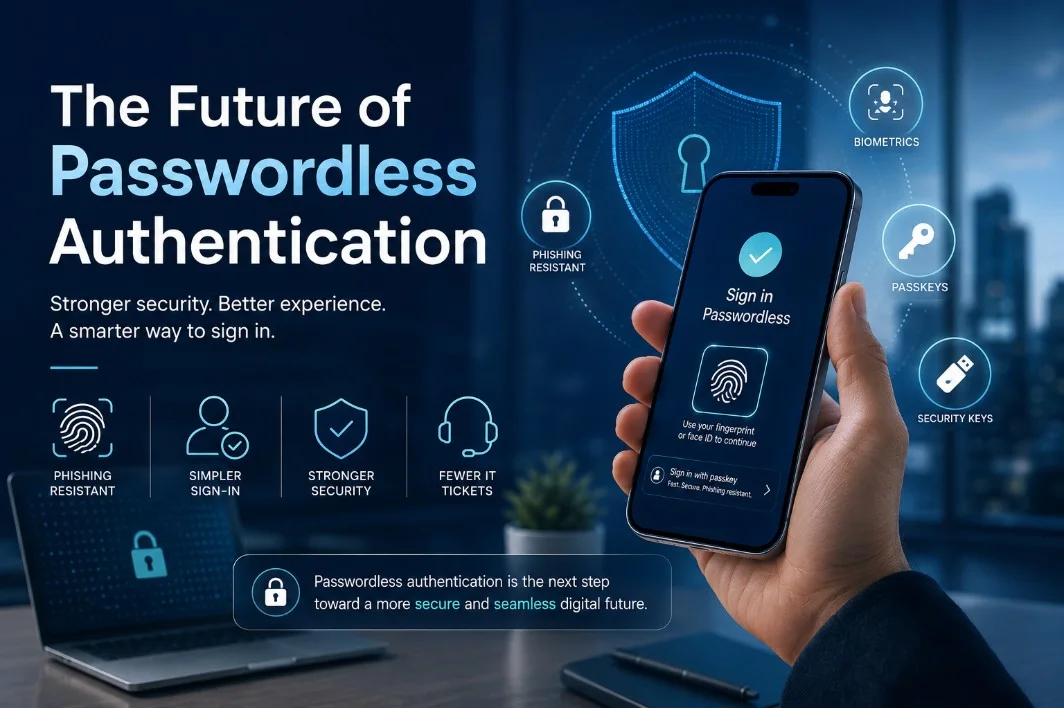
The Future of Passwordless Authentication For decades, passwords have been the first line of defence for digital accounts. They have…
Read More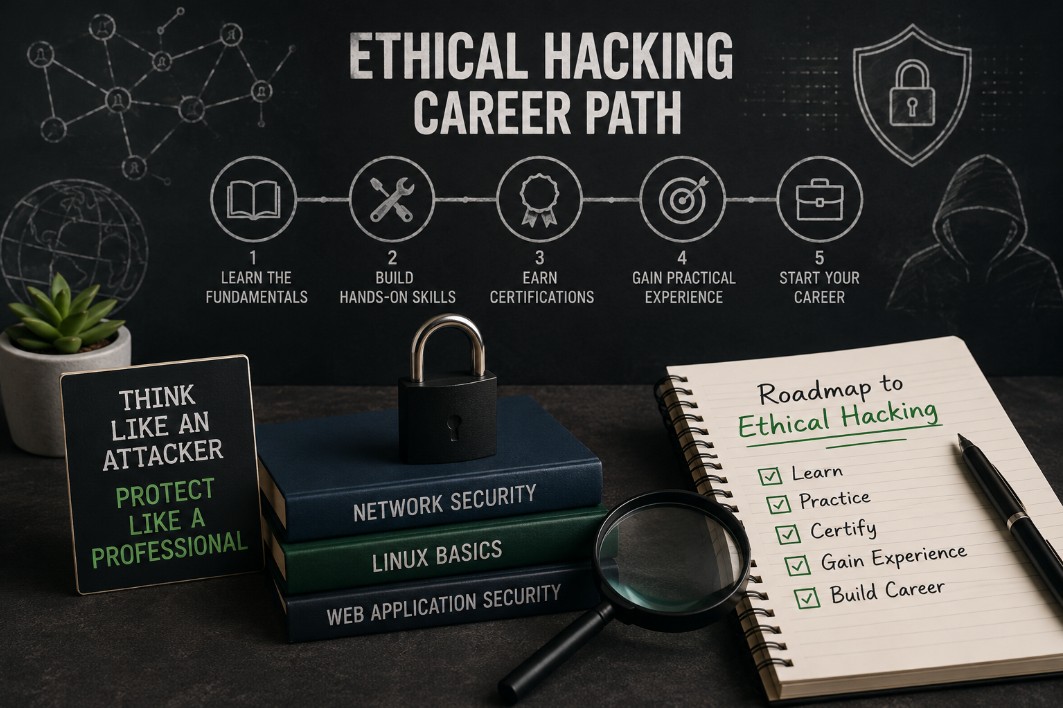
How to Start a Career in Ethical Hacking Cyberattacks are becoming more sophisticated every year, creating an unprecedented demand for…
Read More
How is AI Changing Software Engineering Roles Artificial intelligence (AI) is changing how software is designed, built, tested and maintained.…
Read More